IIM UG Degrees Explained: BBA, BMS, and IPM Clarity

If you are in Class 11 or 12, or you are a parent trying to make sense of all this, the IIM UG space can feel weirdly confusing.
Because people say things like, “IIMs offer BBA now.” Or “That one is BMS.” Or “IPM is like MBA but after 12th.” And then someone forwards a WhatsApp message claiming a totally different thing. Cool. Now everyone is stressed.
So let’s slow it down and get clear.
This guide is meant to do one job: explain what these UG degrees actually are, how they differ, and how you should think about them while planning exams like IPMAT (Indore, Rohtak), JIPMAT, and other IIM UG routes.
No hype. Just clarity.
The quick map: what are we even talking about?
When people say “IIM UG degrees”, they usually mean one of these formats:
Standalone UG programs These are typically BBA or BMS style degrees (3 years or 4 years depending on the institute and policy). Example: some IIMs offer BBA or similar bachelor programs through their newer UG initiatives.
Integrated programs The big one here is IPM (Integrated Programme in Management), which is usually a 5 year program. It includes an undergraduate phase and a postgraduate phase.
Other integrated or joint formats Like programs that culminate in an MBA or Master’s degree, but enter right after 12th, such as the Executive MBA from IIM Indore, or other prestigious institutions like IIM Ahmedabad, IIM Bangalore, IIM Calcutta, and IIM Lucknow.
Now let’s break down the terms you keep hearing.
What is BBA (Bachelor of Business Administration)?
BBA is the most common label people recognize. In plain English, it is an undergraduate business degree. You study a mix of:
Basics of management and business
Accounting and finance fundamentals
Marketing, operations, HR
Economics, business law
Communication, presentations, projects, internships
What BBA usually signals
BBA tends to be positioned as a broad, industry-friendly program. It is not “lesser” than a BCom or BA. It is just more management-focused from day one.
Is BBA always the same everywhere?
Not really.
Two colleges can both call it BBA and still teach quite different things. The label is not as important as:
curriculum structure
faculty quality
batch profile
internships and industry exposure
brand value and outcomes
So when you see “BBA from an IIM” or “BBA linked to IIM ecosystem”, the question isn’t only “Is it BBA?” It is also, “What does this specific program include?”
For instance, an Executive MBA from IIM Lucknow or an Executive MBA from IIM Calcutta could offer a different perspective on what a BBA entails.
What is BMS (Bachelor of Management Studies)?
BMS sounds fancy. Sometimes it is. Sometimes it is basically a BBA with a different name.
Traditionally, BMS programs (especially in some universities) are known for being:
more academically structured
sometimes more quantitative
sometimes more rigorous in economics, analytics, research style courses
But again, don’t generalize too hard. Because institutes use labels differently. For example, IIM Bangalore's Weekend MBA program has unique features that set it apart from others. Similarly, the IIM Udaipur's MBA in GSCM offers specialized knowledge that may not align with traditional BBA or BMS programs.
BBA vs BMS: what is the real difference?
Most of the time, for a student after 12th, the difference is more about the specific institution than the three letters.
A decent way to think is:
BBA often feels more “industry and application” oriented in positioning.
BMS often feels more “structured and analytical” in positioning.
But both can overlap heavily. So instead of getting stuck on BBA vs BMS, focus on:
specialization options (if any)
internships and industry tie ups
student clubs and case competitions
exchange programs and pathways to Master’s
What is IPM (Integrated Programme in Management)?
Now we get to the one that causes the most confusion.
IPM is typically a 5 year integrated program offered by certain IIMs and IIM associated ecosystems. It’s designed for students right after Class 12.
The big promise is simple: You get a structured path from UG level education into a management postgraduate phase, in one combined track.
What do you actually get in an IPM?
Most IPM structures look like this:
First 3 years: undergraduate foundation Mix of quantitative skills, economics, humanities, basic management, sometimes coding, sometimes social sciences, plus projects and internships.
Last 2 years: postgraduate management phase Often aligned with the IIM’s flagship PGP curriculum. For instance, IIM Kozhikode offers a robust PGP program. Similarly, IIM Shillong has its own unique approach with its PGPEX program. Moreover, IIM Udaipur provides specialized courses like Digital Enterprise Management during this phase.
Is IPM equal to MBA?
This is the part people get wrong.
An IPM graduate may end up with a management master’s degree depending on the institute’s structure, but it is not always “MBA” in the traditional CAT route sense. However, some IIMs do offer executive MBA programs which are highly regarded.
Also, some institutes award degrees differently across phases (UG degree after 3 years, then PG degree after 5). The naming and credentialing can vary.
So you should always check what the specific IIM officially awards. And yes, verify on the IIM website, not on some coaching ad.
The real decision: standalone UG vs IPM route
Here’s the simplest framing.
Standalone UG (BBA/BMS) is better if:
you want flexibility to explore and later decide MBA, MS, MiM, or something else
you are unsure about committing to 5 years right now
you may want to switch fields, or go abroad, or try entrepreneurship earlier
you want to keep multiple postgraduate options open, including CAT later
IPM is better if:
you are fairly sure about management as a direction
you want an IIM style environment earlier
you like the idea of an integrated academic structure
you are okay with a longer commitment and a more defined track
And just to be honest, some students choose IPM because they want to avoid CAT. That is not automatically a wrong reason. But it should not be the only reason either.
Because IPM still needs consistent academic effort. It is not “easy mode”. The entrance is competitive, and the program can be intense once you are in.
If you're considering pursuing an executive MBA from one of the top IIMs such as IIM Ahmedabad, IIM Kozhikode, or IIM Bangalore, it's crucial to understand these distinctions and make an informed decision.
“But which one has better placements?”
This is where families tend to spiral. Understandable.
But placements depend on multiple layers:
Institute brand and maturity of the program (older programs have deeper recruiter networks)
Your profile (academics, communication, extra curriculars, internships)
Specialization and skill stack (analytics, finance, product, consulting readiness)
Market conditions in your graduating year
So, instead of asking “BBA vs BMS vs IPM placements”, ask:
What outcomes do I want? Consulting? Finance? Product? Entrepreneurship? Family business? Higher studies abroad?
Which program builds those skills better for me personally? Some students thrive with structure. Some thrive with flexibility.
What does the institute actually publish? Look for official placement reports, not Instagram carousels.
Common myths (that mess up decision making)
Myth 1: “BBA is inferior to BCom”
No. They are different orientations. BCom leans commerce, accounting, and sometimes economics. BBA leans management and business operations. Both can lead to great careers.
Myth 2: “IPM means you automatically get MBA”
Not always in the way people assume. The program is integrated, yes, but degree names and rules vary by institute. Always check the official structure.
Myth 3: “BMS is always more elite”
Not necessarily. Some BMS programs are excellent. Some are average. Same for BBA.
Myth 4: “If I crack IPMAT, life is set”
Cracking the exam is just entry. After that, your growth depends on how you use the next 3 to 5 years.
Entrance exams: where do IPMAT and JIPMAT fit in?
This is important because your “degree choice” often indirectly becomes your “exam choice.”
IPMAT
IPMAT is typically used for admission into IPM style programs. Different IIMs have different tests and patterns. For example:
IPMAT Indore is its own exam, which is crucial for those looking to pursue the IIM Indore EPGP.
IPMAT Rohtak is its own exam.
Both are competitive and have their own style. Quant, verbal, logical reasoning. The weightages and interview processes can differ.
JIPMAT
JIPMAT is associated with certain integrated programs (often 5 year formats). Pattern and competition dynamics differ from IPMAT.
What you should do with this info
If you are deciding between a standalone UG and an IPM, you need to plan earlier than people think. Because these exams need skill building, not last minute mugging.
This is also where structured guidance helps. Not because students can’t do it alone, but because timelines and strategy get messy in real life.
If you want a clean prep plan with mocks, live classes, and interview prep specifically for IPMAT and JIPMAT style admissions, you can check out IIMAdmitMentors. It is built around IIM UG admissions after 12th, with mentorship support and application guidance too (SOPs, profile building, all of it). Subtle plug, yes. But it is relevant here.
How to choose between BBA, BMS, and IPM without overthinking
Here’s a practical way to decide. Not perfect, but it works.
If you're considering the IIM Indore EPGP MBA, it's essential to understand how these entrance exams align with your academic goals.
Step 1: Decide how sure you are about management
Very sure: IPM can make sense.
Not sure: standalone UG keeps options open.
Step 2: Ask yourself what kind of learning you like
Structured, long runway, academic depth: IPM.
More flexibility, internships early, optionality: standalone UG.
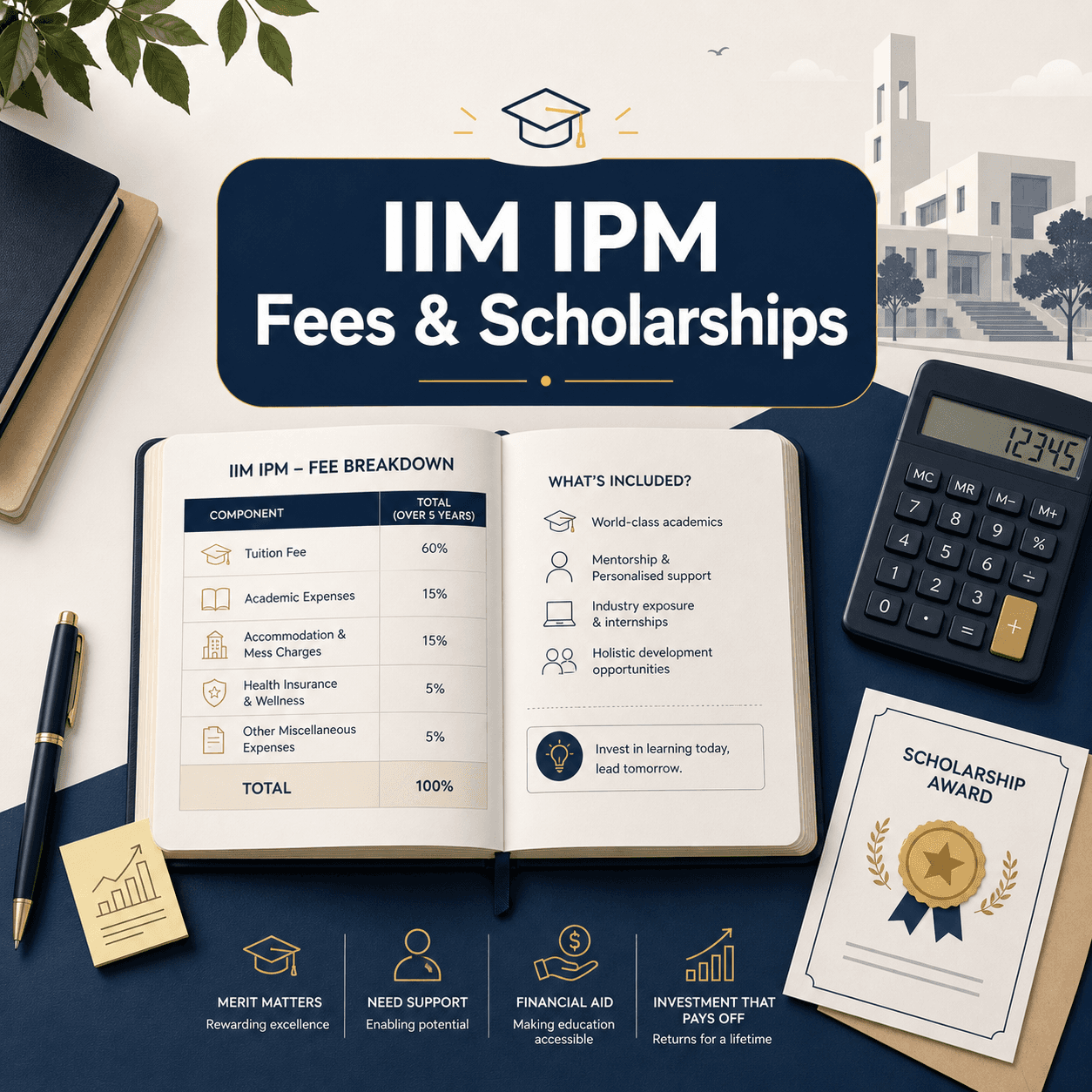
Step 3: Consider cost and commitment
A 5 year program is a bigger commitment. Financially and emotionally. Some students love that stability. Some feel trapped. Know your temperament.
Step 4: Think about exit options
Some integrated programs offer an exit after 3 years with a bachelor degree (depending on policy). Some don’t. Or the exit may not be encouraged. Understand the rules upfront.
Step 5: Don’t ignore interviews and profile
For IIM style admissions, especially IPM, interviews matter. Communication, clarity, confidence, academics, awareness. It is not only about the written exam. To prepare for these crucial IIM interview questions, it's essential to focus on your communication skills and overall confidence.
One more thing: degree name is not the whole story
Students fixate on “Will I get BBA or BMS or something else?”
But recruiters and postgraduate admissions committees often care more about:
what you studied
what skills you built
your projects and internships
your ability to think and communicate
your consistency across academics and activities
So yes, degree clarity matters. But don’t turn it into a prestige contest in your head.
Pick a program where you can actually do well.
Wrap up (without making it dramatic)
BBA is a broad business undergraduate degree. Common, practical, widely understood.
BMS is a management studies undergraduate degree. Often similar to BBA, sometimes more structured or analytical depending on the institute.
IPM is a 5 year integrated track that combines UG foundation with a management postgraduate phase, entered after 12th through exams like IPMAT or JIPMAT.
If you are currently preparing for these exams or an IIM interview, your next best step is not to argue about labels. It is to map your timeline, shortlist the right programs, and start building exam skills and interview readiness early.
And if you want support that is actually focused on IIM UG and integrated admissions after 12th, IIMAdmitMentors is worth a look. They provide mocks, classes, mentoring, interview prep, plus the boring but crucial stuff like application strategy.
That boring stuff is usually what decides outcomes, honestly.
FAQs (Frequently Asked Questions)
What are the different types of undergraduate programs offered by IIMs?
IIMs offer various UG formats including standalone UG programs like BBA or BMS (typically 3-4 years), integrated programs such as the 5-year IPM (Integrated Programme in Management), and other integrated or joint formats that lead to an MBA or Master's degree right after 12th.
What is a BBA degree and how does it differ from other UG business degrees?
BBA (Bachelor of Business Administration) is an undergraduate business degree focusing on management basics, accounting, marketing, HR, economics, and communication. It is industry-friendly and broad-based. However, BBA programs can vary significantly across institutions in curriculum, faculty quality, internships, and brand value.
How is BMS different from BBA?
BMS (Bachelor of Management Studies) often emphasizes more academic rigor with quantitative and analytical courses compared to BBA. While BBA tends to be more application-oriented for industry readiness, BMS may focus more on structured economics, analytics, and research. However, these differences depend heavily on the specific institution rather than just the label.
What exactly is the IPM program at IIMs?
IPM (Integrated Programme in Management) is a 5-year integrated course designed for students after Class 12. It combines an undergraduate phase (first 3 years covering quantitative skills, humanities, basic management) with a postgraduate management phase (last 2 years aligned with IIM’s flagship PGP curriculum), providing a seamless path into management education.
Are all BBA or BMS programs at IIMs the same?
No. Even if programs share the BBA or BMS label, their curriculum structure, specialization options, faculty quality, internship opportunities, student activities, and outcomes can differ widely. Therefore, it's important to evaluate each program individually rather than relying solely on the degree name.
How should students approach choosing between IIM UG programs like IPMAT or JIPMAT?
Students should focus on understanding what each program offers—curriculum content, duration, integration with postgraduate studies—and how it aligns with their career goals. Instead of getting confused by labels like BBA or IPM alone, consider factors like specialization options, internships, faculty expertise, brand value of the institute, and pathways to higher management education when planning for exams like IPMAT or JIPMAT.
{"@context":"https://schema.org","@type":"FAQPage","mainEntity":[{"@type":"Question","name":"What are the different types of undergraduate programs offered by IIMs?","acceptedAnswer":{"@type":"Answer","text":"IIMs offer various UG formats including standalone UG programs like BBA or BMS (typically 3-4 years), integrated programs such as the 5-year IPM (Integrated Programme in Management), and other integrated or joint formats that lead to an MBA or Master's degree right after 12th."}},{"@type":"Question","name":"What is a BBA degree and how does it differ from other UG business degrees?","acceptedAnswer":{"@type":"Answer","text":"BBA (Bachelor of Business Administration) is an undergraduate business degree focusing on management basics, accounting, marketing, HR, economics, and communication. It is industry-friendly and broad-based. However, BBA programs can vary significantly across institutions in curriculum, faculty quality, internships, and brand value."}},{"@type":"Question","name":"How is BMS different from BBA?","acceptedAnswer":{"@type":"Answer","text":"BMS (Bachelor of Management Studies) often emphasizes more academic rigor with quantitative and analytical courses compared to BBA. While BBA tends to be more application-oriented for industry readiness, BMS may focus more on structured economics, analytics, and research. However, these differences depend heavily on the specific institution rather than just the label."}},{"@type":"Question","name":"What exactly is the IPM program at IIMs?","acceptedAnswer":{"@type":"Answer","text":"IPM (Integrated Programme in Management) is a 5-year integrated course designed for students after Class 12. It combines an undergraduate phase (first 3 years covering quantitative skills, humanities, basic management) with a postgraduate management phase (last 2 years aligned with IIM’s flagship PGP curriculum), providing a seamless path into management education."}},{"@type":"Question","name":"Are all BBA or BMS programs at IIMs the same?","acceptedAnswer":{"@type":"Answer","text":"No. Even if programs share the BBA or BMS label, their curriculum structure, specialization options, faculty quality, internship opportunities, student activities, and outcomes can differ widely. Therefore, it's important to evaluate each program individually rather than relying solely on the degree name."}},{"@type":"Question","name":"How should students approach choosing between IIM UG programs like IPMAT or JIPMAT?","acceptedAnswer":{"@type":"Answer","text":"Students should focus on understanding what each program offers—curriculum content, duration, integration with postgraduate studies—and how it aligns with their career goals. Instead of getting confused by labels like BBA or IPM alone, consider factors like specialization options, internships, faculty expertise, brand value of the institute, and pathways to higher management education when planning for exams like IPMAT or JIPMAT."}}]}
Comments